


Hiking shoes vs. boots? Ah, the great dilemma.
The debate on hiking shoes vs. hiking boots is always a hot topic in the hiking community. Whichever side you fall on, we can all agree that the one thing you shouldn’t be taking is your sneakers.
We’ve heard all the arguments on both sides and have come to this conclusion: It depends.
We know that’s not a definitive answer, even if it is the truth, So we’re going to discuss which type of footwear is right for you and how to make your final decision.
Here’s what you need to know.
Keep reading…
Table of Contents
Why You Need Proper Hiking Footwear

Most hikers say that hiking footwear is the most important piece of hiking gear you can invest in.
And they’re right.
The right equipment prevents injuries and makes your adventure more comfortable. So, here are the top reasons to buy the right hiking footwear.
Ankle Support in Rugged Terrain
Your ankles take a beating on the trails, especially in remote areas. Although ankles have lots of flexibility, this is what you don’t want while hiking through canyons, rivers, mountains, and glacial paths.
Ankle sprains and blisters remain the most common injuries, accounting for up to 33% of all reported injuries. Any injury not only ruins your comfort but may also prematurely end your trip.
Having a pair of dedicated hiking boots provides stability to reduce the risk of injury in any environment.
Keeps Your Feet Warm
Hiking footwear contains built-in insulation to help keep your feet warm. When hiking, temperatures can drop quickly, especially at altitude. Think of the right footwear as adding gloves for your toes.
Additionally, hiking boots keep your feet dry if the trails are wet or you’re forced to cross waterways.
Protects Your Feet From the Elements
Hiking footwear protects your feet in any weather. Whether you’re caught in torrential rain or snow, your hiking boots will keep your feet as good as new, letting you continue without a hitch.
Adds Comfort For Long Treks
Long treks are tough on your feet. Give them a break with proper hiking shoes. This footwear contains soles so you don’t feel the ground beneath your feet, while the insides stop the friction between your foot and the inside of your shoe.
In short, they’re not purely for safety but also for comfort to increase your enjoyment of those long hikes.
Why Hiking Boots?
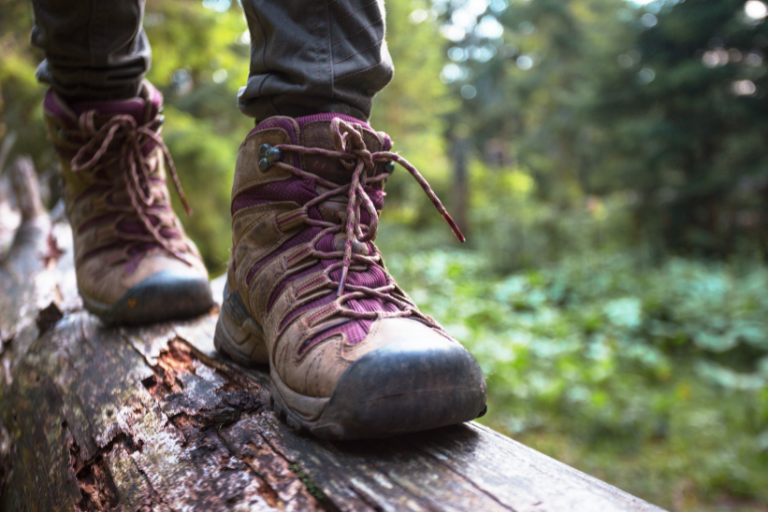
Hiking boots are the armored tanks of outdoor footwear. Older models may even have nails hammered into the soles. They’re rugged, strong, and heavy, letting you tackle anything Mother Nature throws at you.
Sadly, they’ve seen a fall from grace.
For example, in the Appalachian Trail Footwear Summary 2023, around 10% of hikers still wore hiking boots. Although they’ve lost out to their lighter counterparts, like the trail running shoe, they still have their place.
Advantages
- Superior Ankle Support – The heaviness of hiking boots adds extra stability, reducing the chances of injury.
- Added Protection – Hiking boots also provide extra protection for toes and heels.
- Very Durable – Hiking boots are the place to start if you need footwear to last thousands of miles.
- Adaptability –Hiking boots can be worn in any environment and any terrain. With their excellent traction, extra cushioning, and extra waterproofing, a single pair of these can march you through any location or season.
Disadvantages
- Less Breathable – Due to the lack of breathability technology, expect sweaty, smelly feet when taking them off.
- Bulk – Hiking boots are considerably heavier, which can make them uncomfortable for beginners. Expect to use more energy for hiking in these shoes.
- Break-In Period – Their toughness also comes with longer break-in periods. Those first few hikes may be uncomfortable.
- Cost – Hiking boots typically cost more than any other type of hiking footwear.
Why Hiking Shoes?

Hiking shoes are the sneakers of the wilderness. They give you all the added traction, waterproofing, and support you need. Various types of shoes exist, including lightweight trail runners.
So, why have hiking shoes become so popular recently?
Advantages
- Lightweight – Shoes are much lighter than boots, making you the nimble ninja of the trails.
- Flexibility – Hiking shoes are built with lightweight materials, reducing the restrictiveness of your footwear.
- Break-In Period – Most hiking shoes don’t require a breaking-in period, so you can put them on and set off immediately.
- Breathability – Hiking shoes are more breathable, making them an excellent option for hikes through late spring and into autumn.
- Cost – Newer hikers may prefer hiking shoes because they’re more affordable than hiking boots. This also makes them a sensible first choice for beginner hikers and kids.
Disadvantages
- Ankle Support – Hiking shoes offer little to no ankle stability, raising the risk of injury.
- Durability – Hiking shoes are generally not built to last. Expect to replace them much more often than boots.
- Waterproofing – Expect little waterproofing. This means puddles and stream crossings will leave your feet wet.
- Trail Debris – Trail debris isn’t dangerous but can be uncomfortable. Most hiking shoe models offer less protection from debris.
Hiking Boots vs. Shoes: Which One is Right For You?

Today’s hiking community includes around 59.6 million hikers. But there’s no definite answer to the hiking boots vs. shoes debate. A good candidate for a hiking shoe won’t necessarily be one for a hiking boot, and vice versa.
So, what’s the right one for you?
Be sure to take these eight things into consideration.
1. Type
There are enough types of footwear to confuse any hiker. To bring some semblance of order, let’s break them down into four main categories.
Day Hiking Boots
Day hiking boots are precisely what they indicate. They’re what happens when durability meets flexibility for those day-long escapades.
The models range in height from six to eight inches. They flex easily and require no breaking in, but they don’t come with the support of durable backpacking boots.
Backpacking Boots
Backpacking boots are the heavyweights of the trail, designed for long-distance hikers on multiday trips. They contain stiff midsoles and display impressive durability on rocky terrain and in wet conditions. However, they also flex for shorter stride lengths amid difficult terrain.
Most backpacking boots have a high cut wrapping around the ankle by default for extra support. This footwear is also ideal for trips with heavier loads.
Hiking shoes
Hiking shoes deliver a low-cut design with flexible midsoles for those quick, no-nonsense adventures. Wanderers with light packs on well-marked trails will find options with stiffer soles that are ideal for their trips. Typical hiking shoes are the midway point between ordinary sneakers and boots.
Trail Runners
Trail running shoes were initially designed for running races through the wilderness. Today, they’ve been adopted by hikers as the unlikely heroes of the hiking world. Most trail runners are lightweight making them a popular option, with decent traction and cushioned soles to reduce the strain on your feet and ankles.
Don’t try to use them on challenging terrain unless you really want to feel every stone beneath your foot – and not in a good way. The average trail runner just doesn’t have the durability to handle those difficult adventures. For example, we don’t recommend them for trips like the Continental Divide Trail.
2. Cut
The cut of hiking footwear is how high the shoe or boot finishes on your ankle or leg. Here’s a basic guide to different cuts:
- Low-Cut – Low-cut shoes provide the greatest range of motion but expose the ankle bone to injury. Low-cut options include trail runners, which allow ease of movement.
- Mid-Cut – Mid-cut hiking shoes or boots rise above the ankle to protect your ankles and offer stability. They’ll offer more freedom of movement than high-cut options but also reduce protection from the elements.
- High-Cut – High-cut boots rise a few inches above the ankle bone. Most are made of leather or rubber and offer the highest grade of waterproofing. Remember, these are also the heaviest. These are ideal for mud, rain, and snow.
3. Material
You want the material that’ll protect your feet and keep you comfortable. The wrong material could expose you to the elements or leave your feet moist or hot. Here’s what you need to know about the different materials available.
Full-Grain
Full-grain leather is the ultimate material for serious hikers. It can withstand any rough terrain and is highly resistant to abrasion. However, it sacrifices breathability and weight.
Split-Grain
Split-grain leather is a combination of leather and synthetic material. Synthetics make them more breathable and lighter. In contrast, it doesn’t offer the same durability as full-grain leather. The advantage, though, is that it’s cheaper than full-grain leather boots.
Nubuck
Nubuck resembles the smooth texture of suede. It’s made from sanding and buffing full-grain leather. Its composition makes it resistant to abrasion and water while also being durable to tackle all but the least forgiving terrains.
Synthetics
Synthetic materials, such as nylon and polyester, are increasingly used in hiking apparel. However, synthetics cannot compete with genuine leather for durability and waterproofing. They also dry faster and are much lighter.
Vegan
Some hikers may want to avoid animal ingredients. The market offers a selection of vegan hiking footwear to satisfy those who prefer to avoid leather. However, in many cases, vegan footwear doesn’t perform as well as its traditional counterparts.
4. Comfort and Fit

Every blister might tell a story, but that story is the wrong shoe choice.
It’s not feasible to wear shoes that put unnecessary strain and discomfort on your feet in the middle of nowhere. Getting a proper fitting is essential for increasing comfort. This is why we recommend either visiting an expert or heeding this advice.
Proper Knotting
Conventional knots work, but they won’t provide the comfort you expect. Instead, consider trying alternative knots.
Many hikers recommend the surgeon’s knot. This knot secures the laces wherever you want them on your foot. Learning this knot equips you with versatility to overcome any nagging foot problem.
Correct Sizing
What’s the rule of thumb for correct sizing? Focus on length and width.
Check the length of your boots. Most humans have one foot longer than the other, so size footwear based on your longer foot. Place your longer foot in the boot and stand up straight. Move your foot forward as far as possible and check behind your heel. It’s correctly fitted if you can fit one finger inside.
Check the width by lacing up your boots and then feeling your feet. Your feet should neither be squeezed inside nor slide from side to side.
Aftermarket Insoles
Adding insoles to your boots offers foot arch support and prevents injury through repetitive impact. Firm insoles are generally the best aftermarket insoles for shoes. They protect your feet from the impact of hiking and contain structured heel cups.
5. Destination
Where you’re going also matters because your shiny trail runners won’t stand up to a rocky, root-filled trail. Most serious hikers possess multiple footwear types for different environments. Here’s what to consider.
Terrain
Do you need extra traction? What about waterproof materials? Full-blown hiking boots are typically reserved for challenging trails and colder weather. On the other hand, well-trodden trails in a local country park mean lighter options, like shoes and trail runners, are the better choices.
Humidity Levels
Hiking shoes suit hot and dry conditions, while boots are best for cold and wet weather. However, this isn’t a hard and fast rule.
Even though you may prefer breathable trail runners when the humidity soars, the trail conditions may make them inappropriate.
Traction Needed
Think about the risk of slipping and falling. Steep, rocky, uneven, and slippery conditions require the highest traction possible. In this case, boots will provide a noticeable difference in your experience.
6. Weather Conditions

Check the weather forecast as part of preparing for your hike. Consider not only what the weather is like now but also what it could be like a few hours after setting out.
If there’s rain and snow, break out the boots. If there’s sun and heat, break out the shoes or trail runners.
7. Weight
Lighter-weight footwear is always easier to hike in. According to the Mountain Tactical Institute, one pound on your feet is equivalent to five pounds on your back.
Sometimes heavy boots may be unavoidable, but consider whether you’re fit enough to handle heavier models.
8. Body Type
Body type also fits into the weight consideration. Thicker body types naturally place more wear on your joints, just like throwing on a heavier backpack.
If you’re naturally carrying extra weight, look for extra support in high-grade hiking boots.
Comparing Hiking Shoes vs. Boots and Other Footwear Types
While it’s true that many hikers have different kinds of footwear in their arsenal, it’s essential that you start where you can. Here’s a recap of what to consider when comparing hiking boots vs. shoes.

Making Your Final Decision
And there we have it.
Unfortunately, there’s no concrete answer to the shoes vs. boots debate. The best alternative to owning several pairs for different activities, which is an admirable goal, is to start small and gain experience. Then, it’s just a matter of doing your research and ensuring you pick the right pair for your unique situation.
Whatever you do, remember to always make an effort to disconnect from the nonstop busyness of life and connect with nature and the great outdoors. It’s so essential.
With that in mind, the right footwear is just one part of your hiking gear. Stay informed by reading our guides on hiking in the rain, what type of camping tent you need, and more.

